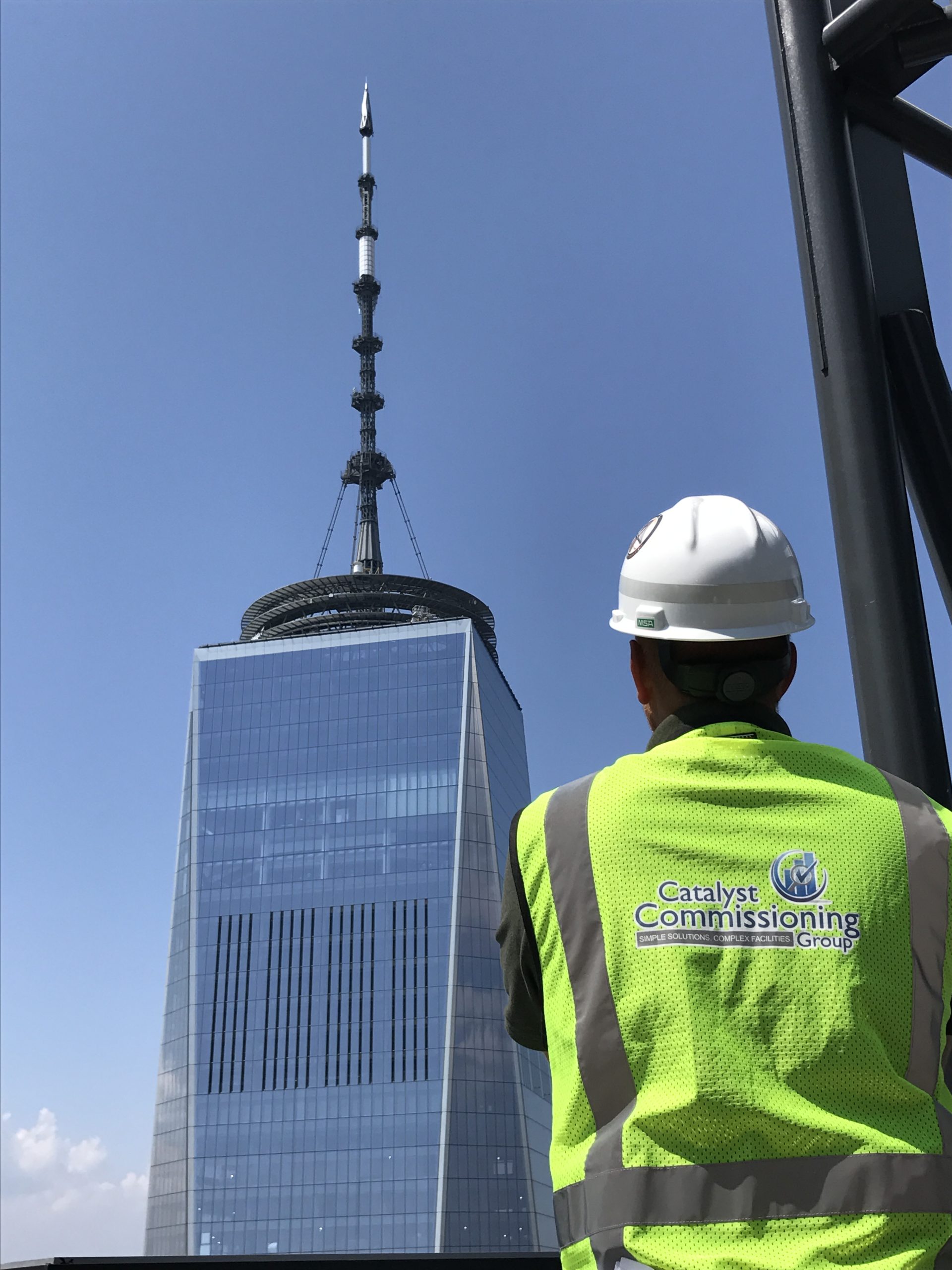
Founded in 2014, Catalyst Commissioning Group has grown from a specialized consultancy to a comprehensive technical services firm supporting customers with K-12 schools and retail performance parameters to biocontainment and mission-critical facilities where performance and reliability aren’t negotiable.
Our Story
Founded in 2014 by Earl LaFlamme IV, PE, Catalyst Commissioning Group began with a simple vision: bring owner and operator-focused expertise to commissioning and technical services. What started as a consultancy firm informed by decades of experience as facility operators, designers, and field engineers has evolved into a multidisciplinary team serving the world’s most sophisticated clients and demanding facilities.
Our growth tells the story: We’ve earned client confidence through technical excellence, collaborative approach, and unwavering commitment to performance and reliability.
The facilities we serve demand excellence: hyperscale data centers processing millions of transactions per second, BSL-4 laboratories researching pandemic threats, semiconductor cleanrooms manufacturing next-generation chips, hospitals where environmental failures threaten patient safety, and research facilities advancing human knowledge.
These aren’t typical buildings. They’re mission-critical infrastructure where failure isn’t an option.
Revenue
Growth

 Data Centers
 Research Labs
 Healthcare
 Semiconductor
 Industrial
 K-12 Schools
 Pharma
 Retail
Remote office locations throughout North America providing coverage

Office:
Bethlehem, PA

Expertise:
100+ Years
Combined
Experience
Our Process
Stage 1: Establish Priorities and Alignment
Every project begins by understanding what success means to each stakeholder, then facilitating alignment toward compatible goals.
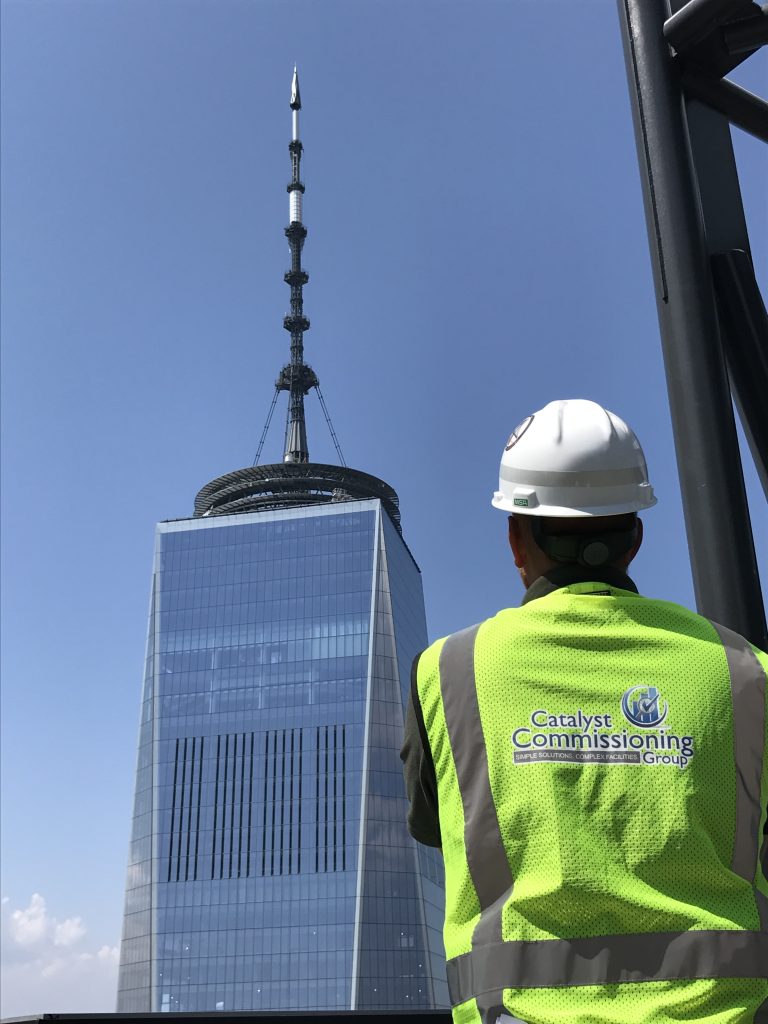
Stage 1: Establish Priorities and Alignment
Every project begins by understanding what success means to each stakeholder, then facilitating alignment toward compatible goals.
Owner performance requirements. Contractor schedule and budget constraints. Designer intent. Operator capabilities. Tenant needs. Developer ROI objectives.
We facilitate alignment, ensuring everyone works toward compatible goals. Our experience serving all stakeholder types gives us unique insight into balancing competing priorities and finding solutions that create mutual success.
This initial alignment prevents miscommunication, scope gaps, and expectation mismatches that derail projects later. We ask hard questions early, clarify assumptions, document requirements, and ensure shared understanding before construction begins. We maintain this alignment at whichever phase of a project we are engaged.
Deliverable: Owner's Project Requirements (OPR) document and stakeholder alignment confirmation. Review of procurement specifications for any early owner-furnished contractor-installed (OFCI) sourcing of project equipment.
Stage 2: Design Review and Optimization Opportunities
Comprehensive design reviews identify potential problems when corrections require only drawing revisions, not expensive field rework.
Stage 2: Design Review and Optimization Opportunities
Comprehensive design reviews identify potential problems when corrections require only drawing revisions, not expensive field rework.
Unplanned and costly change orders during construction often stem from design issues that could have been identified earlier. Our comprehensive design reviews, informed by working knowledge of industry guidelines, equipment limitations, and understanding of constructability, help identify potential problems when solutions are straightforward.
We review:
- Information flow and system integration strategies
- Control sequences for practicality and energy efficiency
- Equipment selections for performance, maintainability, and longevity
- Spatial coordination and maintenance of accessibility
- Owner requirement alignment
- Constructability and installation logistics
Our goal: Contract documents that clearly convey scope and intent, leaving nothing subject to interpretation. We ensure owner needs are captured in designs and owners understand their facility's capabilities, enabling seamless transition from construction to operations.
Deliverable: Design review reports at Design Development (DD), Construction Document (CD) phases, and final document phases with recommendations and owner/design team responses. This deliverable is adjusted for design-build, integrated project delivery, and energy conservation projects, where project documentation and delivery requirements may differ from traditional design, bid, build projects.
Stage 3: Hands-On Field Presence
We're not desktop reviewers. We're in the field working alongside designers, manufacturers, fabricators, integrators, contractors, and operators at critical project stages.
Stage 3: Hands-On Field Presence
We're not desktop reviewers. We're in the field working alongside designers, manufacturers, fabricators, integrators, contractors, and operators at critical project stages.
Catalyst's defining characteristic is our hands-on approach. We're not remote consultants issuing reports from distant offices; we're on-site during critical activities:
- Construction observations at key installation milestones
- Equipment startup witnessing manufacturer procedures
- Pre-functional verification confirming readiness for testing
- Integrated systems testing verifying cross-discipline coordination
- Problem-solving sessions when technical challenges arise
- Training observations ensuring operators receive quality instruction
This field presence serves multiple purposes:
✓ Verifying installation quality in real-time
✓ Catching problems immediately when corrections are simple
✓ Building relationships and trust with site teams
✓ Understanding actual site conditions, informing recommendations
✓ Facilitating collaboration between trades and stakeholders
From simple assessments to comprehensive LEED Enhanced Commissioning, we have the team members and tools to integrate seamlessly into construction processes, working as partners, not policemen.
Stage 4: Quality Control Through Construction
Routine site visits and inspections focus on installation quality, construction schedule, with maintenance accessibility and long-term reliability in mind.
Stage 4: Quality Control Through Construction
Routine site visits and inspections focus on installation quality, construction schedule, with maintenance accessibility and long-term reliability in mind.
Our construction observations aren't casual walk-throughs; they're systematic quality verification with specific focus areas:
Installation Compliance:
- Verify installation per manufacturer requirements and approved submittals
- Confirm design document compliance
- Identify specification deviations requiring correction
- Document installation quality with photographic evidence
Maintainability Assessment:
- Confirm equipment access for future maintenance
- Verify clearances for serviceability
- Identify potential operational and maintenance challenges
- Recommend corrections before concealment
Critical Installation Stages:
- Factory and/or Integrator Inspections and Testing
- Protection of Materials and Equipment During Shipping, Storage, and Installation
- Flushing, Cleaning, and Passivation
- Duct and Pipe Pressure Testing and Balancing
- Control panel installation, wiring, and point-to-point verification
- Building Envelope Critical Transitions
- Fire Alarm & Smoke Control System Integration
- Toxic Gas and/or Life Safety Monitoring System Integration
- Equipment Startup, Load Testing, and Initial Operation
- Pre-Functional Testing
Equipment that cannot be accessed cannot be properly maintained, resulting in decreased performance and premature failure. Our construction observations prevent these problems before they're built into facilities.
We work collaboratively with contractors, witnessing selected equipment startups, reviewing test data, and ensuring quality control processes are established early and maintained through completion.
Stage 5: Comprehensive Functional Testing
The heart of commissioning. Systematic verification that equipment and systems perform as designed under all operating conditions.
Stage 5: Comprehensive Functional Testing
The heart of commissioning. Systematic verification that equipment and systems perform as designed under all operating conditions.
Functional testing is where commissioning proves its value. We don't just verify equipment turns on, we test every critical function under multiple operating scenarios:
Our Testing Methodology:
Equipment-Level Testing First: Individual equipment functional performance tests verify proper operation, safety controls, capacity, efficiency, and sequence execution before system integration. Whatever testing that could not be performed at the factory or the off-site integrator is now executed. In certain circumstances, the owner requires some minor overlap in testing for equipment that was tested off-site with temporary utilities that may have limited the equipment’s ability to fully demonstrate performance.
System Integration Testing: Multiple pieces of equipment working together; air handling units with terminal boxes, chillers with towers and pumps, fire alarm with smoke control; cooling distribution units with Technical Cooling Systems and IT Racks, all tested as integrated systems.
Cross-Discipline Integration: Systems crossing trades must work in unison. Example: Smoke control systems may involve a fire alarm (electrical contractor), a building management system (controls contractor), and fire/smoke dampers (mechanical contractor). Our testing verifies complete integration, ensuring life safety.
Multiple Operating Conditions: Systems are tested under a design day, part load, minimum load, emergency, failure mode, and transition conditions; not just single-point verification.
Who's Involved: We work simultaneously with contractors (executing tests), vendors (providing technical support), operators (learning systems), and end-users (confirming performance meets needs). System operation is documented, conveyed, and understood for building lifecycle management.
As construction shifts toward owner acceptance, our testing intensity increases, demonstrating systems meet performance criteria and are ready for productive operation.
Deliverable: Functional test procedures, test reports with data logs, deficiency tracking, effective reporting, timely resolution, and final verification documentation
Stage 6: Post-Turnover Support and Optimization
True commissioning value appears as buildings become occupied. We remain to support the warranty phase and fine-tuning that ensures persistent performance.
Stage 6: Post-Turnover Support and Optimization
True commissioning value appears as buildings become occupied. We remain to support the warranty phase and fine-tuning that ensures persistent performance.
The true test of commissioning occurs as buildings transition from construction to operations. During this critical period:
System Interactions Emerge: MEP systems interact in ways not apparent during construction-phase testing. Simultaneous heating/cooling, control conflicts, and operational inefficiencies surface under real-world conditions.
Fine-Tuning Is Essential: Temperature setpoints, control sequences, scheduling, alarm thresholds, and alarm response require adjustment based on actual occupancy patterns, use, and facility staffing.
We Listen and Respond: Operators and occupants provide critical input. We investigate complaints, analyze trends, distinguish legitimate issues from unrealistic expectations, and recommend appropriate solutions.
Warranty Phase Support: Inevitable minor issues arising in new facilities require investigation. We:
- Identify root causes of equipment problems
- Distinguish contractor responsibility from operational issues
- Recommend appropriate corrective actions
- Verify fixes restore proper performance
- Document issues supporting warranty claims
This support protects owner interests while maintaining constructive contractor relationships. We're not adversarial but objective and fair.
Beyond Initial Commissioning: For clients pursuing ongoing performance excellence, we provide:
- Continuous commissioning programs
- Monitoring-based commissioning (MBCx)
- Retro-commissioning services
- Energy optimization programs
- Operator training refreshers
- Alarm rationalization
- Repair scope review and follow-up re-testing
These services ensure initial capital and commissioning investments persist throughout the building's life, preventing significant performance degradation typical in non-commissioned buildings within 3-5 years.
Deliverable: Post-occupancy reports, seasonal testing results, warranty issue tracking, optimization recommendations

Experience Across All Stakeholder Perspectives
We understand owner performance requirements, contractor schedule pressures, designer intent, and operator capabilities because we’ve held all these roles. This comprehensive perspective enables genuine collaboration, not just coordination.
Experience Across All Stakeholder Perspectives
We understand owner performance requirements, contractor schedule pressures, designer intent, and operator capabilities because we’ve held all these roles. This comprehensive perspective enables genuine collaboration, not just coordination.
Our Team’s Credentials
Our Leadership
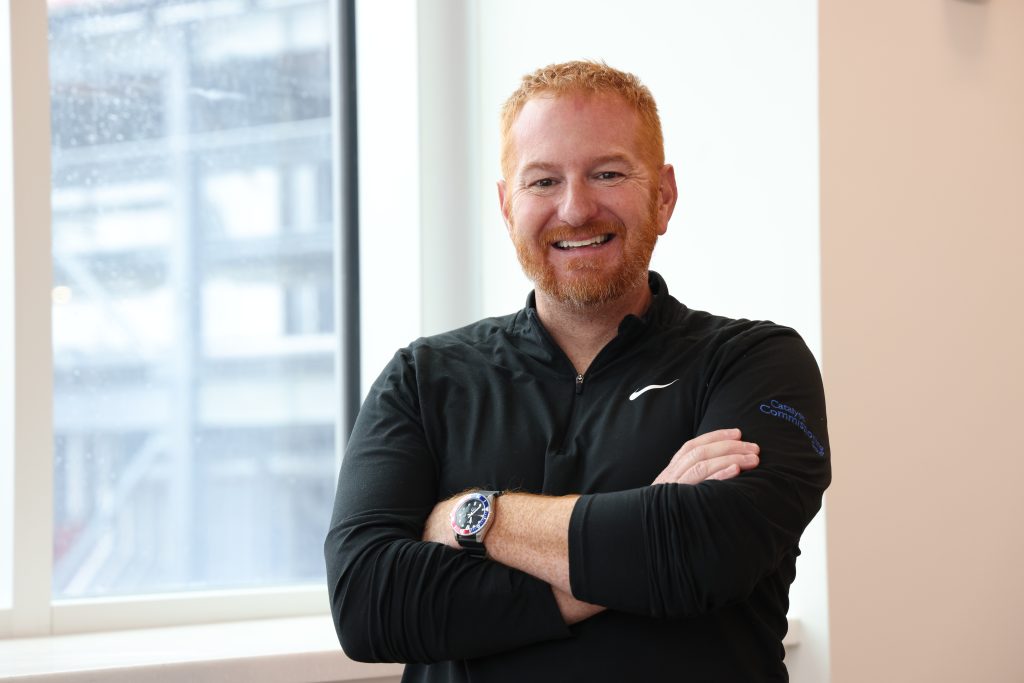
Earl LaFlamme IV, PE
Principal-Owner & Founder
Earl LaFlamme IV, PE
Principal-Owner & Founder
Earl LaFlamme founded Catalyst Commissioning Group in 2014 after extensive experience spanning facility operations, mechanical engineering design, and commissioning across mission-critical facilities.
Over the past 25 years, Earl has worked on the design, operation, and commissioning of major mechanical systems and equipment ranging from central utility plants to state-of-the-art bio-containment facilities and datacenters. He strives to provide a seamless transition from concept to turnover throughout the life of a project. His ability to review the design and confirm that the intent is clearly defined and that it meets the owner’s requirements has saved a great deal of time and budget for many clients.
Throughout his experience, Earl has had the opportunity to work on behalf of both the owner and the construction team. As a result, he can step back and consider the interests of all stakeholders in a project. As the principal of Catalyst Commissioning Group, he works to ensure that his team’s experiences and lessons learned work to the benefit of Catalyst’s clients.
Education: Mechanical Engineering
Certifications: Professional Engineer (PE), CxA, CCP, EMP
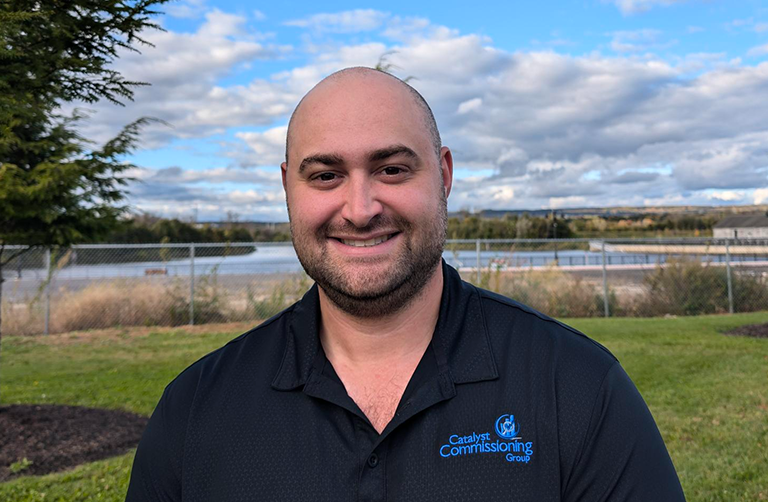
Christopher Fischer
Director of Commissioning
Christopher Fischer
Director of Commissioning
Christopher Fischer brings a wealth of engineering field experience to the table, beginning with his work maintaining MEP systems on ships as a graduate of the SUNY Maritime College.
Since joining Catalyst, Chris has taken on a pivotal role in commissioning services, where he has been responsible for developing commissioning plans, creating detailed checklists, tracking issues, coordinating schedules, and executing functional performance tests. His comprehensive understanding of the commissioning process allows him to guide clients through every phase—from the early stages of design to project occupancy—ensuring that their needs and expectations are met.
Chris excels in investigating, troubleshooting, and resolving challenges related to building automation systems and mechanical sequences of operations. His strong communication skills foster trust and transparency with clients, assuring them that the facilities delivered will meet design intent and operational requirements. By prioritizing the best interests of owners and project teams throughout the commissioning process, Chris is committed to enhancing the performance and longevity of their investments.
Education: Marine Engineering
Certifications: EMP, CEM, CMVP, CCP, LEED AP

Dariusz Raczkowski
Director of Client Services
Dariusz Raczkowski
Director of Client Services
Dariusz Raczkowski leads business development and client relationships, bringing 25 years of experience in mission-critical infrastructure spanning failure investigation, operations, emergency response, engineering, construction, and infrastructure planning. His comprehensive project delivery knowledge across diverse industries ensures Catalyst delivers exceptional client experiences from initial engagement through project completion and beyond.
Dariusz's strategic approach to commissioning services integrates technical excellence with business objectives, helping clients understand how commissioning investments protect capital expenditures and operational budgets. His involvement in 7x24 Exchange mentoring and industry thought leadership on topics like datacenter waste heat reuse and direct liquid-to-chip cooling positions Catalyst at the forefront of mission-critical facility trends.
He also translates his comprehensive experience into tangible client value when supporting his team and Catalyst’s clients with boots-on-the-ground project leadership and/or field support. Stakeholders receive solutions that are not only technically sound but also politically viable and commercially practical. By understanding the motivations and constraints of each party involved, from budget limitations to operational requirements, Dariusz guides project teams to deliver outcomes that exceed expectations while avoiding costly missteps.
Education: Facilities & Environmental Engineering | Mechanical Engineering | Facilities Management | Financial Risk Management
Certifications: CEM, CPMM, CRL, CWI
Why Choose Catalyst
Our Commitment
Every project is unique, requiring a customized scope to meet specific goals. Whether you’re developing a hyperscale data center, renovating a research laboratory, pursuing LEED certification, investigating equipment failure, or augmenting your technical team, Catalyst brings the expertise, perspective, and commitment to ensure your success.
We don’t just verify systems work.
We ensure they perform flawlessly when failure isn’t an option.
Ready to Discuss How Catalyst Can Support Your Project?
Catalyst Commissioning Group: Where technical expertise meets practical experience, and diverse perspectives create collaborative success.
“Their technical acumen coupled with their understanding of scheduling and commissioning was displayed in everything that was asked of them. These projects faced numerous challenges, issues and unexpected results. The main difference between complete chaos and organized results was having Catalyst as part of the team to engage and drive through any/all challenges presented to them for consistent and predictable results.”